When severe weather impacts our community, the focus is on safety, recovery, and helping one another rebuild. Unfortunately, these situations can also attract scammers who look for opportunities to take advantage of people during times of uncertainty.
Understanding how weather disaster scams work can help you recognize warning signs and protect your finances while you focus on recovery.
Why Scams Increase After Severe Weather
After storms, floods, or other disasters, there is often an urgent need for repairs, financial assistance, and reliable information. Scammers take advantage of that urgency.
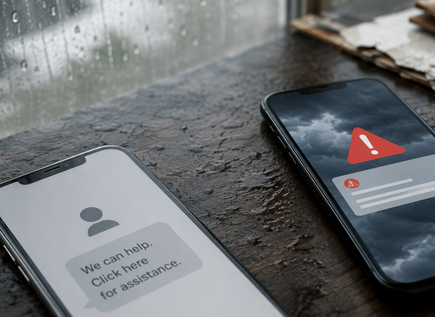
They may show up in person, call, text, or send emails pretending to offer help. In reality, their goal is to collect money or personal information. Federal agencies warn that scammers often target communities immediately after disasters because people may feel pressure to act quickly.
Taking a moment to pause and verify before making decisions is one of the most effective ways to stay protected.
Common Weather Disaster Scams to Watch For
Contractor and repair scams
After severe weather, fraudulent contractors may offer quick cleanup or repairs. These scams often involve requests for large upfront payments, pressure to act immediately, or incomplete or poor-quality work.
Unlicensed contractors are a common issue after disasters, and it is important to verify credentials before agreeing to any work.
Government impersonation scams
Scammers may claim to represent agencies like FEMA or other disaster relief programs. They might offer to “help” you apply for assistance or promise faster access to funds, often for a fee.
It is important to remember that legitimate disaster assistance programs do not charge fees to apply, and officials do not request payment or financial information through unsolicited calls or messages.
Charity and donation scams
In the aftermath of severe weather, many people want to help others recover. Scammers take advantage of this by creating fake charities or fundraising pages that look legitimate.
These scams often come through emails, social media, or text messages and may use urgent or emotional language to encourage quick donations.
Insurance and financial scams
Some fraudsters pose as insurance representatives or financial professionals, offering to help process claims or speed up payments. They may ask for policy details or personal information.
It is always best to contact your insurance provider directly using verified contact information rather than responding to unexpected outreach.
Recovering from severe weather is never easy but don't have to navigate it alone. By staying informed, asking questions, and taking a moment to verify before acting, you can help protect yourself and your finances during challenging times.
Ways to Protect Yourself
Recovering from severe weather can feel overwhelming, but a few practical steps can help reduce your risk:
- Take time to verify businesses, agencies, or individuals before sharing information
- Be cautious of high-pressure tactics or “limited-time” offers
- Avoid making payments through gift cards, wire transfers, or cash requests
- Confirm identities by contacting organizations directly through official channels
Scammers often rely on urgency and confusion. Slowing down and asking questions can help you make more confident decisions.
If You Suspect a Scam
If you notice suspicious activity or receive a message that seems unusual, it is important to act quickly.
Connect with our team before taking action. We are here to help you understand what is happening and guide you through your next steps.
For additional tips and resources, visit our Security Center or contact us at 608‑278‑2801.


 Park Bank