Park Bank has received reports that clients are receiving fraudulent phone calls impersonating the bank. We will never call you and ask for your online banking credentials. If you believe you have given out any account information, please hang up and contact our At Your Service Team immediately at 608.278.2801.
Strong nonprofits are built on strong leadership. While staff members drive an organization's day-to-day operations, an engaged and effective board can provide the guidance, expertise, and connections needed to advance a mission and navigate change.
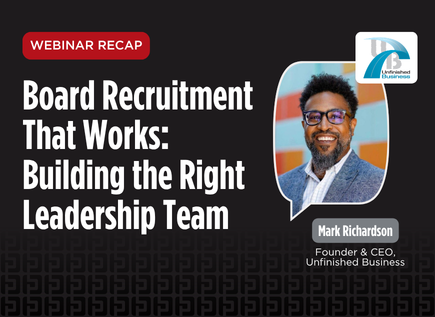
During a recent Park Bank webinar, Board Recruitment That Works: Building the Right Leadership Team, nonprofit consultant and board leader Mark Richardson shared practical strategies for recruiting, onboarding, and retaining board members who can help organizations thrive.
Whether your nonprofit is recruiting its first board members or looking to strengthen an established board, these were some of the webinar's most valuable takeaways.
Start with Self-Assessment Before Recruitment
Many organizations begin board recruitment by asking a simple question: "Who can fill the open seat?"
Richardson encouraged nonprofit leaders to ask a different question first: "What does our organization actually need?"
Before recruiting new board members, leaders should take time to assess their organization's strengths, challenges, goals, and current leadership structure. Understanding where the organization is today and where it wants to go tomorrow can help identify the skills and experiences needed around the board table.
Just as organizations create profiles when hiring associates, they should develop profiles for the type of board members they hope to recruit.
The goal isn't simply filling vacancies. It's finding people who can help the organization achieve its mission.
Understand the "Who, What, and Why" of Your Current Board
One of Richardson's most practical recommendations was evaluating current board members through three lenses:
Who are they? Consider where members are in their careers, their personal commitments, and their capacity to contribute time and energy.
What do they bring? Document professional expertise, industry knowledge, certifications, community connections, and other strengths.
Why do they serve? Understanding motivation is critical because board members volunteer their time. Some serve because they are passionate about the mission. Others are seeking networking opportunities, leadership development, mentorship, or a way to give back to the community.
When organizations understand what board members hope to gain from their service, they are better positioned to create meaningful experiences that keep members engaged and invested.
Use a Board Matrix to Identify Gaps
Recruiting strategically requires a clear picture of the board you already have.
Richardson recommends creating a board matrix that tracks the skills, backgrounds, experiences, and perspectives represented on the board.
A board matrix may include information such as:
Professional expertise
Community connections
Geographic representation
Leadership experience
Fundraising strengths
Demographic diversity
Board tenure
Volunteer interests
While the exercise may feel analytical, it helps organizations move beyond recruiting based solely on availability or familiarity.
Instead, leadership teams can identify skill gaps and proactively seek candidates who bring valuable perspectives and experiences to the organization.
Recruitment Should Start Earlier Than You Think
One of the most common mistakes nonprofits make is starting the recruitment process too late.
According to Richardson, organizations should begin conversations with prospective board members six months to a year before they hope those individuals will join the board.
Many highly qualified candidates are already serving in leadership positions or being recruited by other organizations. Building relationships takes time, and organizations need an opportunity to explain their mission, discuss expectations, and demonstrate the impact board members can make.
Successful recruitment is less about filling a seat and more about building alignment between a prospective member's interests and the organization's mission.
Invest in the Onboarding Experience
A board member's first few months often determine whether they become a long-term contributor or struggle to find meaningful ways to engage.
Richardson emphasized the importance of creating a structured onboarding experience that helps new members understand:
The organization's mission and strategic priorities
Board responsibilities and expectations
Committee opportunities
Meeting structures and annual cycles
Key relationships and stakeholders
Several attendees were especially interested in Richardson's recommendation to bring multiple new board members on at the same time whenever possible.
Joining alongside a cohort of peers can help new members build relationships more quickly, learn together, and feel more confident contributing to discussions.
Diversity Strengthens Boards
Organizations benefit when their boards reflect a variety of experiences, perspectives, and communities.
Richardson encouraged nonprofit leaders to regularly evaluate who is represented around the board table and consider whether the board reflects the populations the organization serves.
For organizations seeking stronger connections with specific communities, one of the most effective approaches is recruiting leaders from those communities directly. Those individuals often bring valuable lived experiences, perspectives, and relationships that can strengthen both governance and community engagement.
Engagement Matters More Than Attendance
Many organizations focus heavily on getting board members to show up to meetings.
While attendance matters, Richardson suggested there's a more important question to ask:
Do board members feel like they're making a meaningful contribution?
Board members are often accomplished professionals with busy schedules. When they understand how their skills are being used and feel connected to the organization's impact, they're more likely to remain engaged.
That means ongoing communication, clear expectations, and regular opportunities to contribute in ways that align with their strengths.
A Strong Board Is About More Than Fundraising
One topic that generated significant discussion during the webinar was financial giving.
Richardson reminded attendees that a board member's value extends beyond their ability to make a financial contribution.
Some members provide strategic expertise. Others open doors to valuable community relationships. Some offer mentorship, project management support, marketing insight, or professional guidance.
The most effective boards recognize and leverage the unique strengths each member brings to the organization.
Building the Board Your Mission Needs
Nonprofits continue to face evolving challenges, shifting funding environments, and changing community needs. Building a thoughtful and engaged board has never been more important.
The organizations that succeed in the years ahead will be those that recruit intentionally, onboard thoughtfully, and create meaningful opportunities for board members to contribute.
A strong board isn't simply a governance requirement. It's a strategic asset that can help your organization move confidently toward its next chapter.
If you're looking for a banking partner that understands the unique needs of nonprofit organizations, we'd love to start a conversation. Contact our local Community Engagement bankers.
Want the full conversation?
Watch the complete July 2026 webinar recording on YouTube:
To provide you with the best possible online experience, we sometimes partner with other organizations we trust. We refer to these organizations as "third-party vendors". Each of these vendors is required to provide us with proof they follow our stringent security protocols as a condition of our partnership. Although we perform due diligence of our vendors prior to signing agreements for their services, when you leave our website, we can not certify the privacy and security of the sites you are entering, and the content within the third-party site is solely the responsibility of the site's owner. If you have any concerns about continuing online with your request, please feel free to schedule an appointment to meet with us in person.

 Park Bank