Park Bank has received reports that clients are receiving fraudulent phone calls impersonating the bank. We will never call you and ask for your online banking credentials. If you believe you have given out any account information, please hang up and contact our At Your Service Team immediately at 608.278.2801.
For many nonprofit organizations, fundraising conversations often focus on finding new donors. While acquiring new supporters is important, long-term sustainability depends on something else: retaining the donors you already have.
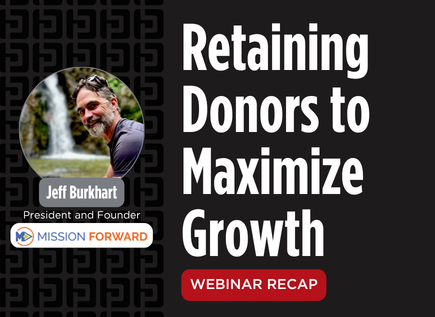
That was the central message of Park Bank's webinar, Retaining Donors to Maximize Growth, featuring nonprofit consultant Jeff Burkhart of Mission Forward. Drawing on decades of nonprofit leadership experience, Burkhart shared practical strategies organizations can use to deepen donor relationships, improve retention, and create sustainable growth.
One statistic stood out immediately.
According to research shared during the webinar, only one in six first-time donors ever makes a second gift. At the same time, it can cost significantly more to acquire a new donor than it does to retain an existing one.
The main conclusion is clear: organizations that invest in donor relationships often see stronger long-term results.
Retention is Really About Relationships
When donors make a gift, they're doing more than completing a transaction. They're investing in a cause they care about and trusting an organization to turn their contribution into meaningful impact.
Burkhart encouraged attendees to view donor relationships from the donor's perspective by asking five important questions:
Does the donor trust the organization?
Is communication timely and thoughtful?
Does the donor feel appreciated?
Can the donor clearly see the impact of their gift?
Does the donor feel like a partner in the mission?
Organizations that consistently answer "yes" to those questions are more likely to retain donors and strengthen relationships over time.
The Biggest Reason Donors Don't Give Again
Many nonprofit leaders assume donors stop giving because they lose interest or face financial constraints.
While those factors certainly exist, Burkhart highlighted a different challenge. Often, donors simply don't know whether their gift made a difference.
When an individual supports an organization and never receives meaningful follow-up, it's difficult for them to understand the impact they helped create. Without that connection, future giving becomes less likely.
The solution is intentional communication that helps donors see exactly how their support is advancing the mission.
Three Steps to Stronger Donor Retention
Throughout the webinar, Burkhart returned to a simple framework that organizations can use to improve donor retention:
Ask Tangibly
Donors respond best when they understand exactly what their gift will accomplish.
Rather than making broad funding requests, organizations should clearly explain:
The challenge they're addressing
Why it matters
What they're doing to respond
How donor support will help
When funding is needed
Specific needs create stronger connections than general appeals. When donors understand the purpose behind a request, they're better able to see themselves as part of the solution.
Thank Wholeheartedly
Acknowledgment is one of the most overlooked opportunities in fundraising.
Burkhart stressed the importance of timely, personal thank-you messages that go beyond standard donation receipts.
Handwritten notes, thank-you cards, and personal phone calls can all help donors feel valued. Boards and volunteers can play an important role here by assisting with donor appreciation efforts.
One simple question can also unlock meaningful conversations: "What inspired your gift?"
Understanding donor motivations helps organizations build more meaningful relationships and create stronger future communications.
Report Meaningfully
The final step is often the most important. Organizations should regularly communicate the outcomes made possible through donor support. That doesn't necessarily mean creating individual reports for every donor. Instead, stories, newsletters, email updates, and impact communications can help demonstrate results.
Most importantly, the communication should focus on the donor's role. Rather than saying, "We accomplished this," consider saying, "You helped make this happen." That subtle shift positions donors as active participants in the mission rather than passive supporters.
The "Upward Spiral" of Giving
Burkhart described donor retention as an upward spiral.
It begins when a donor makes a gift. The organization then expresses appreciation, communicates impact, builds trust, strengthens the relationship, and ultimately creates a positive experience that makes future giving more likely. Each step reinforces the next.
As trust grows, donors become more engaged. As engagement grows, they are more likely to support the organization again. Over time, these relationships often deepen and become increasingly valuable to both the donor and the organization.
The goal isn't simply securing the next gift. It's building a lasting partnership.
Tell Stories That Respect Dignity
Storytelling remains one of the most powerful communication tools available to nonprofits, but Burkhart emphasized the importance of using stories ethically.
Strong donor communications should:
Focus on strengths and accomplishments
Highlight real impact
Use clear, conversational language
Respect individual dignity
Include proper consent when sharing personal stories
Most importantly, stories should connect donor support to meaningful outcomes without exploiting those being served.
Authentic, respectful storytelling helps donors see the difference they're making while reinforcing trust in the organization.
Don't Rely Solely on Social Media
A question from webinar attendees focused on how organizations can communicate effectively in an increasingly crowded digital environment.
Burkhart encouraged nonprofits not to rely exclusively on social media platforms. While social media remains an important communication tool, email, direct mail, newsletters, and personal outreach continue to play an important role in donor retention. Consistent communication delivered through multiple channels helps organizations stay connected to supporters and reinforce key messages.
The most effective strategy is often a balanced approach that combines traditional and digital communication methods.
Small Actions Can Lead to Significant Growth
One of the most compelling parts of the webinar came when Burkhart reflected on his experience leading Literacy Network.
By investing in donor relationships, improving oversight practices, and intentionally sharing impact stories, the organization experienced significant growth over time. Many donors who began by making modest gifts became long-term supporters who contributed at much higher levels as their connection to the mission deepened.
The lesson wasn't that every donor would become a major donor. The lesson was that every donor relationship matters.
Building Sustainability Through Caring
Donor retention isn't ultimately about fundraising tactics. It's about building trust, demonstrating impact, and creating meaningful relationships with people who care about your mission.
Organizations that prioritize appreciation, communication, and stewardship often create stronger foundations for future growth.
When donors feel informed, valued, and connected to results, they are far more likely to continue supporting the work that matters to them.
At Park Bank, we understand that strong nonprofit organizations create stronger communities. That's why we're committed to providing educational resources, community partnerships, and relationship-focused banking solutions designed to help mission-driven organizations achieve their goals. To learn more about Park Bank's nonprofit banking services and educational resources, contact us our Community Engagement Team.
Want the full conversation?
Watch the complete May 2026 webinar recording on YouTube:
To provide you with the best possible online experience, we sometimes partner with other organizations we trust. We refer to these organizations as "third-party vendors". Each of these vendors is required to provide us with proof they follow our stringent security protocols as a condition of our partnership. Although we perform due diligence of our vendors prior to signing agreements for their services, when you leave our website, we can not certify the privacy and security of the sites you are entering, and the content within the third-party site is solely the responsibility of the site's owner. If you have any concerns about continuing online with your request, please feel free to schedule an appointment to meet with us in person.


 Park Bank